


There's a nervous excitement. Visible is the chilled vapour emanating from my fellow runners as they execute the "pre-race" wiggle on the start line.
A rapid twitch of the hips.
I'm participating in my local 5km community parkrun and I'm focused. Three, two, one...
Wait a second. I need to start my device. The same goes for the runner alongside me.
The person behind us sighs. I won't start until… there! Signal acquired, away I go.
Amidst the crowd, it's hard to see a person without a wearable on it. And this extends beyond us participants who use them.
This is a explosive, multi-billion dollar industry. Brands like Samsung Galaxy are prevalent, all offering an broad array of various models to cater to a range of lifestyles. Based on how high tech the watch you go for, prices can vary between an affordable sum to a significant investment.
"It makes me crazy, I'm unable to relax."
"It reassures me… It's like a companion encouraging me."
"I wish it wouldn't say I've had a restless night."
A small sample of the responses I've received from fellow tracker enthusiasts when I inquire what they think of theirs.
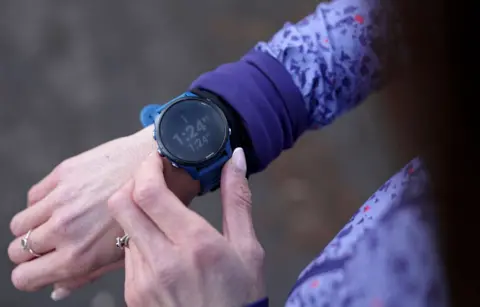
The Data Dilemma
My feelings on mine? Right now, frustrating. It's indicating I'm off pace, leading me to doubt whether the overhead branches along my route are interfering with my location tracking.
Millions of us attach these compact devices onto our wrists and wear them constantly, ostensibly comfortable with the fact they're constantly monitoring us.
Long past are the days when we relied on them exclusively to give us an idea of our step count. Today, they can track our sleep patterns, stress levels, oxygen saturation, our VO2 max.
It's difficult to find a health indicator they fail to monitor.
But can they do what they advertise? And are the numbers we analyse a faithful picture of the truth? Do they boost our daily wellness, or do the avalanche of readings and motivational messages just add to our everyday anxiety?

A Complicated Bond
"I find myself getting a a little preoccupied with mine," a wearer admits.
While she values how her device monitors her runs, she finds some of its other functions "overwhelming" at times - a feeling that became apparent during a significant period.
Prior to discovering she could put it into a specific mode, her smartwatch repeatedly informed her she was failing to be productive enough. Now, the watch insists her she's had a restless night.
"I am caring for a young baby, there's no point to be notified my sleep was poor," she says. "I'm acutely aware all too clearly."
Why doesn't she just take it off?
"I suppose I could, theoretically, but I've got this push-pull dynamic with it," she continues. "I appreciate it for its workout tracking, but I'm unsure whether all the other things it can now do is perhaps too much for me."
Inside the Device
Every device of smartwatch has its own unique way of tracking your health metrics and interpreting your data, but the vast bulk use sensors on the underside of the watch.
They typically project minute LED lights onto your skin which can monitor blood flow, recording your BPM. More advanced devices detect changes in the bioimpedance that passes over the skin to get an idea of your stress levels.
A Fine Balance
A professor says that in general for smartwatches, it's a "difficult line" - while the continuously improving tech could realistically aid early diagnosis, "identifying issues before we feel unwell", it could also turn us the tracked into the "concerned but fine".
He points out that the most advanced wearables can carry out tests like medical-grade monitoring, which constantly monitor how healthy the heart is. They can alert if someone is experiencing an irregular rhythm, where there is erratic signals in the heart causing an arrhythmia.
This does not automatically signal someone is about to have a cardiac event, but it can give an early warning they might be more vulnerable of a blood clot in the future.
But how to interpret these readings is not straightforward. The expert fears that as further capabilities are added, people may not be able to fully contextualise their data.
"I'm not entirely convinced that the ability to monitor so many things is such a beneficial thing," he says.
A professor specialising in cardiology concurs. A study into the effect of wearable tech on a set of cardiovascular patients suggested a minority of those who were given devices to monitor their condition experienced increased anxiety and were "more inclined to use healthcare resources".
She noted a cycle with her patients - they spotted a alarming metric on their watch. They felt anxious. Their BPM went up. They got increasingly anxious. They re-examined the data, and their reading rose further.
"If we see numbers about ourselves that we don't really understand then, understandably, we are going to seek clarification," the psychologist says. "We check, we check again - it becomes a vicious cycle."


